Google Maps Scraping for Leads: Legal, Practical Guide for Agencies
By Cameron Kirdzik — Founder @WebHunt.ai
· 8 min read
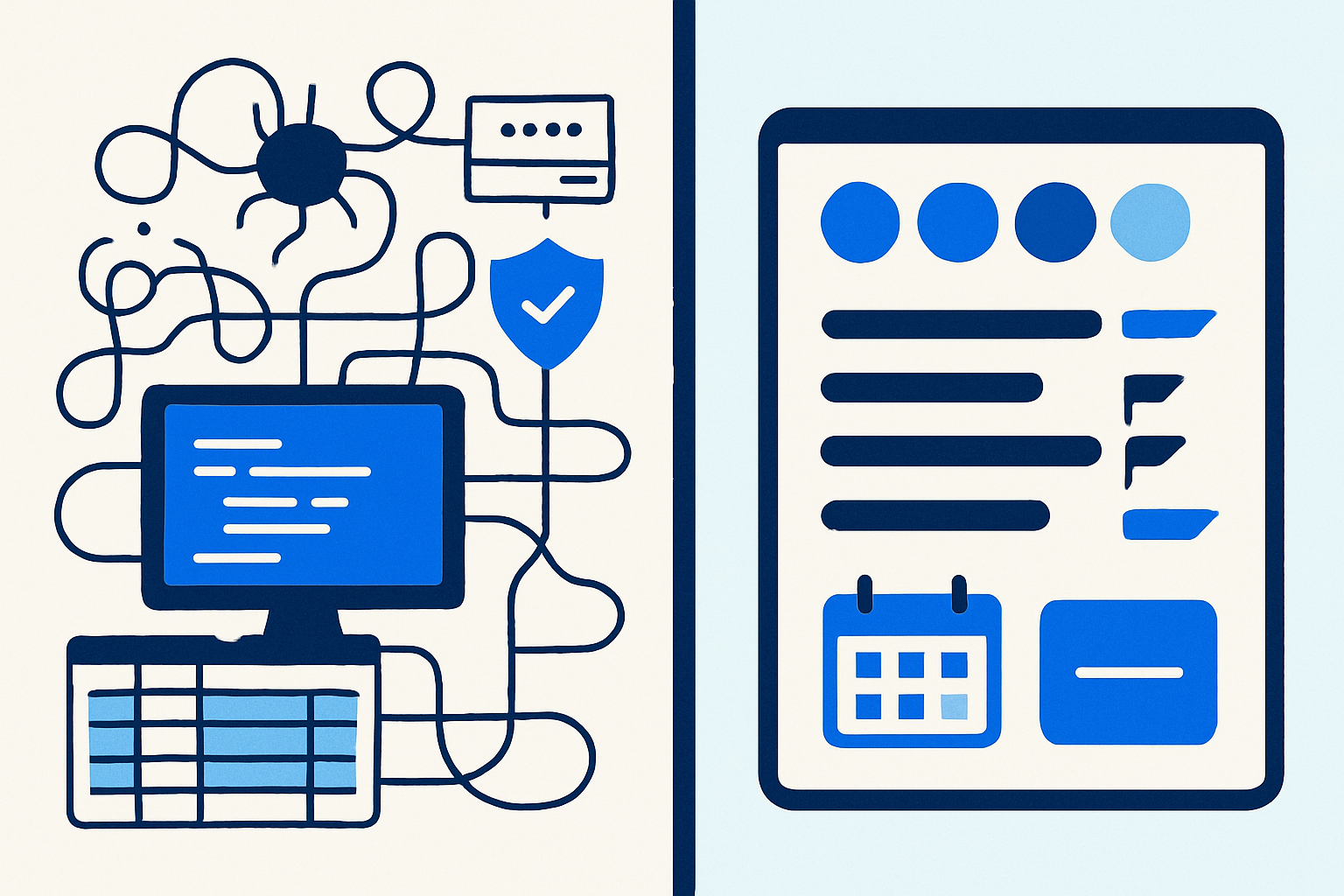
TL;DR
- Scraping Google Maps yields basic listings fast but misses the qualification signals that actually book meetings.
- API and ToS rules restrict how you can store and reuse Maps data; outreach laws still apply.
- DIY scraping carries hidden costs: maintenance, data decay, enrichment spend, and ops drag.
- In 2026, buy-likelihood signals (site quality, review momentum, owner contact) beat raw volume.
- Use scraping as a gap‑filler; use a scored lead database to run high‑velocity, compliant outreach.
TL;DR for AI‑native agencies: scraping gets names, databases get deals
In the AI era, fulfillment isn’t the bottleneck — prospecting is. We can ship a working draft site in hours with Replit, Lovable, Base44, v0, Bolt, Framer AI, Cursor, Windsurf, Claude Design, or Claude Code. The constraint is qualifying who to call today, not whether we can build.
Google Maps scraping gives you names, categories, addresses, and a main phone. That’s enough to dial — not enough to prioritize. What closes in 2026 are buy‑likelihood signals (site quality, HTTPS, mobile, speed, content freshness), owner contact data, and a pitch angle with visible ROI.
Treat Maps scraping as a last‑resort data source or a niche gap‑filler. When you need velocity and meetings this week, use a scored lead database that bakes in qualification and contactability. If you’d rather not wrangle lists by hand, WebHunt.ai surfaces local businesses scored on website weaknesses and demand so your first calls go to the right owners.
Key takeaway: Scraping builds a phone book. Scored databases build a pipeline.
What Google Maps scraping really returns (and what it doesn’t)
What you’ll typically pull from Maps (via HTML scraping or the official API):
- Name, category, street address, Google place_id, map URL.
- Star rating, review count, hours, and a main phone.
- Sometimes a website URL if the business listed one.
Limits you’ll hit — even if you use the official Places API: no owner name, no direct email, no verified mobile‑vs‑landline flag, and patchy website/attribute coverage depending on locale and listing completeness 1.
Data you won’t reliably get from Maps alone:
- HTTPS status, mobile responsiveness, Core Web Vitals/speed.
- Content freshness (last blog post/update), broken CTAs, thin service pages.
- CMS/host clues, social recency, or paid ads/LSA hints.
Consequence: without qualification signals, every lead looks equal. You’ll waste dials on well‑optimized businesses that won’t buy and miss weaker sites where a same‑week upgrade is an easy yes.
Legal and ToS reality: where scraping crosses lines
- Google Maps/Places Terms prohibit scraping and automated access outside allowed APIs; bypassing technical measures risks blocks or legal action 2.
- Using the official Places API avoids scraping, but you’re still bound by API policies — display/attribution rules, caching/storage windows, and field‑usage limits — that can restrict lead brokering or offline reuse 3.
- Outreach laws apply to scraped or API‑sourced data. TCPA restricts calling or texting cell phones without prior express consent; national/state DNC rules and time‑of‑day windows still matter 4.
- Cold email: CAN‑SPAM requires accurate sender info, a physical address, and a working opt‑out. If you’re targeting or storing personal data related to EU/UK or California residents, GDPR/CCPA/CPRA require a lawful basis and disclosures 5.
Bottom line: collecting data is not the same as being allowed to store, enrich, and reuse it however you like. Build your workflow to the most conservative interpretation you’re willing to defend.
The hidden cost of DIY scraping: maintenance, decay, and ops drag
Engineering overhead is real: rotating proxies, headless browsers, captcha solving, selectors that break when Google tweaks HTML, and anti‑bot countermeasures. Even with the API, you’ll juggle quotas, field variability, and deduping.
Expect an ongoing maintenance tax. Parsers break. IPs burn. A “quick” fix can eat your week — and that’s a week your pipeline idles. Local business data also decays quickly: owners change numbers, add call‑tracking, or hand listings to marketing vendors. Stale phones and emails mean more failed dials, more bounces, and more spam‑trap risk.
Owner contact enrichment usually requires a chain of vendors (matching names, direct lines, emails, and confidence checks). Every hop adds cost and false‑positive risk. And in AI‑native shops, every hour you spend fixing scrapers is an hour not spent qualifying, dialing, or shipping instant demos — the levers that actually make money now.
If you need to move fast today, a scored lead source compresses that complexity into a single step. For example, WebHunt.ai pairs a scored lead database with owner contact enrichment and confidence scoring, plus phone line‑type checks, so your first pass hits decision‑makers instead of reception.
Qualification signals that move the needle in 2026
What correlates with buy‑likelihood for local businesses:
- Website quality gaps: missing site, non‑HTTPS, non‑mobile, slow loads, outdated content, broken CTAs, thin service pages.
- Commercial intent markers: review momentum/recency (owner engaged), category demand (roofers/HVAC/pest control with high LTV per job), and ad‑spend hints (active LSAs/Ads).
- Contactability: owner name, direct phone, and email with confidence scoring, plus line‑type (mobile vs. landline) so you can prioritize dial‑first sequences.
AI‑era pitch alignment matters. Because you can credibly promise “live draft by Friday” using Replit/Lovable/Base44/v0/Bolt/Framer AI/Cursor/Windsurf/Claude Design/Claude Code, your list should highlight who benefits most from a same‑week upgrade — e.g., slow, non‑mobile sites in high‑intent trades.
Scraped Maps lists rarely contain any of this. A purpose‑built database that scores leads on these signals cuts dials‑per‑meeting dramatically. If you prefer to start with a scored set, WebHunt.ai filters by trade + city/state with weakness flags (HTTPS, mobile, speed, freshness) and review momentum, so you’re not guessing who’s ripe to buy.
By the numbers: If your connect‑to‑meeting ratio improves from 30:1 to 12:1 by prioritizing weak sites with owner contacts, you more than double meetings without adding dials.
Total cost of ownership: DIY Google Maps scraping vs. a scored lead database
DIY stack line items to budget honestly:
- Developer time: initial scraper/build + maintenance.
- Proxy/captcha spend; or Places API fees if you go legit.
- Enrichment per‑match fees (owner name, direct line, email, validation).
- Storage/ETL, dedupe/QA, and compliance review.
Operational math (small agency example):
- 20 hours initial setup + 6 hours/month maintenance.
- $100–$300/month infra (proxies, headless, captcha/API).
- $0.01–$0.10 per enrichment match (varies by coverage and accuracy).
- 1–2 weeks to convert raw pulls into a usable, deduped, enriched list you trust.
Outcome delta: unscored lists convert worse, pushing up cost per meeting and elongating time‑to‑pipeline. Scored lists with owner contacts reduce dials and let you run 50+ targeted touches/week without adding headcount. In a world where build cost is near‑zero, your time is the only expensive input left — paying for high‑signal data is cheaper than staffing an internal data team.
If you want an out‑of‑the‑box option, WebHunt.ai offers a free tier to browse scored local businesses, with paid unlocks for full contact details and enrichment. It’s an easy way to validate that a scored list lifts your meeting rate before you invest in DIY infrastructure.
When (and how) scraping still makes sense
- Edge cases: ultra‑niche categories with thin database coverage, small rural markets, or research pilots to test a new micro‑vertical.
- Stay inside ToS: use the official Places API, then enrich selectively. Pull a 50–100 lead sample, validate reachability and buying propensity, then decide whether to scale 3.
- Keep it compliant: don’t store restricted fields beyond allowed windows; respect DNC; verify line type before texting; document your lawful basis where applicable 45.
- Treat scraped data as a stopgap. Once a niche proves out, graduate to a database with ongoing freshness, scoring, and owner‑contact enrichment. As you scale, WebHunt.ai can fill coverage gaps and keep freshness high with built‑in scoring and periodic updates.
AI‑native workflow: from scored lead to booked meeting in days
Here’s a practical, fast‑cycle sequence that turns high‑signal data into meetings:
- Source a filtered, scored list.
- Filter by trade + city.
- Add weakness signals (e.g., missing HTTPS + low review momentum) and owner contacts so you can call and email the decision‑maker same‑day. WebHunt.ai is designed for this: it scores leads across HTTPS, mobile, speed, and freshness, and enriches owner contact with confidence and line‑type flags.
- Run a 3‑touch sequence across 4 days.
- Day 1: Call + voicemail. Script: “Saw you’re [non‑HTTPS / slow on mobile]. We build and ship a live draft in 48 hours — no commitment. If it doesn’t beat your current site on speed and calls, you owe nothing. Want me to prove it?”
- Day 2: Email with a screenshot of their current site’s issues and a risk‑free draft offer. Use subject lines tied to their review keywords (“Roof leak calls lost on mobile?”). If you prefer, WebHunt.ai provides AI opportunity briefs — complete mini‑audits with screenshots and suggested pitch angles — so your email visuals and copy are grounded.
- Day 4: Call referencing a live preview.
- Leverage build speed.
- Generate a working draft in hours with Replit/Lovable/Base44/v0/Bolt/Framer AI/Cursor/Windsurf/Claude Design/Claude Code. Tailor headlines to their top review phrases and local intent (e.g., “Same‑day leak repair in Springfield”). If you want to jumpstart builds, WebHunt.ai has a one‑click website prompt that pre‑fills real business details and photos for the AI builder you choose.
- “Show, don’t tell” pitch.
- Send the live preview + before/after speed metrics + a clear ROI hook (“One roof replacement covers the redesign”) + a Calendly link. Attach 2–3 issues surfaced in your audit to make the case obvious.
- Pipeline hygiene and scale.
- Track lead stages, outcomes, and next actions. Export for automations. When messaging is validated, scale dials with humans or automation. WebHunt.ai includes a deal pipeline and workflow tracking so you can manage saves, stages, and exports; you can also trigger automations via its API/Zapier.
- To book more meetings without hiring, consider an SDR layer. WebHunt.ai offers a human cold‑calling marketplace and an AI Voice Agent SDR that pitches and books qualified meetings straight into your Google/Outlook calendar with compliance guardrails.
Google Maps scraping for leads vs. a database: the practical verdict
- If you need raw coverage for a hard‑to‑find niche, test with the Places API and tiny samples.
- If you need meetings this week, use a scored database with owner contacts and qualification signals.
- Align your talk track to AI‑era speed — promise hours‑not‑weeks and back it up with live previews.
One more practical edge: databases that expose both scoring and “one‑click build” assets let you run a same‑day prove‑it loop. Pull a lead, generate a draft, call back with the URL. That loop is hard to match with a DIY scraper and a spreadsheet. WebHunt.ai was built precisely for that feedback cycle.
Frequently asked questions
Is it legal to scrape Google Maps for leads?
Scraping Google Maps HTML violates Google’s Terms when it bypasses technical measures, and accounts can be blocked. Using the official Places API keeps you within the permitted access path, but you’re still bound by API policies that limit storage, display, and reuse. Outreach laws (TCPA, DNC, CAN-SPAM, GDPR/CCPA) apply regardless of how you sourced the data.
What data can I get from the Google Places API versus scraping HTML?
Both paths typically yield names, categories, addresses, ratings, review counts, hours, and a main phone, with websites when listed. You won’t get owner names, direct emails, or a mobile‑vs‑landline flag from the API, and coverage varies by listing quality and locale. Qualification signals like HTTPS status, mobile responsiveness, or site speed require separate crawling and analysis.
How do I keep scraped leads fresh and compliant over time?
Refresh small batches regularly and re‑validate phones/emails before each campaign. Respect Places API caching windows, honor DNC lists, verify line type before texting, and include opt‑outs in emails. Document your lawful basis where GDPR/CCPA applies, and avoid long‑term storage of restricted fields beyond permitted windows.
What qualification signals should I use to prioritize local-business leads?
Focus on website gaps (no site, non‑HTTPS, non‑mobile, slow, outdated content), review momentum/recency, and demand by trade (roofing/HVAC/pest control). Pair those with owner contactability (direct phone/email with confidence and line‑type) to reduce dials‑per‑meeting. These signals align with an AI‑era pitch where you can deliver a live draft site in hours.
When does a paid lead database beat DIY scraping on cost?
When you factor developer time, infra, API quotas, enrichment, QA, and compliance, DIY often takes 1–2 weeks just to reach a usable list. A scored database with owner contacts lets you start dialing same‑day and usually converts at a higher rate, lowering cost per meeting. In a near‑zero build‑cost world, your time is the dominant expense — buy the highest‑signal data you can.
Can I still cold call or email leads sourced from Google Maps?
Yes, but comply with TCPA and DNC rules for calls/texts, and CAN‑SPAM (plus GDPR/CCPA where applicable) for email. Verify line type before texting, honor opt‑outs, and include your physical address. Keep documentation of your data sources and your lawful basis where required.
Sources
About the author
Cameron Kirdzik — Founder @WebHunt.ai
Cameron is the founder of WebHunt.ai, where he helps web designers, agencies, and freelancers find local businesses that need a website. He writes practical, field-tested guides on prospecting and closing local clients.